Annual General Meetings 2026: The new shape of value
Inside Ardian
Annual General Meetings 2026: The new shape of value
-
30 June 2026
Reading time: 5 minutes
The new shape of value
The new shape of value
This year's AGM was framed around the theme "The new shape of value" – the evolving nature of value creation and protection in private equity, as detailed in Ardian’s 2025 Integrated Report, released alongside the event.
In their introductory remarks, CEO and Founder of Ardian Dominique Senequier and Co-CEO of Ardian Mark Benedetti emphasized that in a world of macroeconomic volatility and shifting dynamics, value creation in private markets is now back to fundamentals – operational excellence, disciplined pricing and conservative leverage.
Mark gave the example of NETCO, recently sold by the Expansion team: “They helped the company nearly triple their earnings over the holding period by helping them enter eleven new markets around the world. That's what we mean by value creation: it's rolling up your sleeves and helping improve businesses.”
“Private equity is about excellent management, not paying too high a price and not too much leverage,” said Dominique. “That is the secret recipe.”
Both speakers highlighted that markets have proven resilient despite recent geopolitical tensions. Mark pointed to the importance of earnings: “Take the public markets: in Q1 2026, the S&P 500 recorded its strongest earnings growth in five years. If I contrast that with private markets, it is more of the same. Across our secondary portfolio, EBITDA grew 13% over the last 12 months. So earnings matter.”
Looking out to the wider industry, Dominique said: “I think private equity is adapting to a different cycle. Many investors have reached their target allocations, while exits have slowed. As a result, they need different tools to generate liquidity, including the secondary market, CFOs and continuation funds.”
While the traditional exit market could recover as conditions improve, she said higher US interest rates would continue to weigh on exits. “It creates new opportunities for us, as we are specialists worldwide in liquidity solutions.”
In this environment, deep sector expertise and trusted relationships continue to be key. “We're a big believer that this is a people business,” said Mark. “You have to be a trusted partner, and you have to do it for a long period of time to get that trust”
Mark underlined that Ardian has maintained a 30-year track record. The firm has now reached $200 billion in assets under management, and in 2025 deployed $32 billion, raised $21 billion and – perhaps most importantly – returned $13 billion to investors.
Europe under pressure, not in decline
Europe under pressure, not in decline
The keynote was given by Pierre Sellal, a former French Ambassador to the European Union and senior French diplomat. In a forward-looking speech, he argued that geopolitics has re-emerged as a decisive force shaping the global economy – but that narratives of inevitable European decline are overstated.
He outlined four strategic priorities already underway across the EU: reinforcing defense and strategic autonomy, securing affordable and decarbonized energy, deepening capital markets, and rebalancing regulation to boost competitiveness without abandoning climate or social commitments.
Sellal closed with a clear message: Europe has the capacity to adapt, remain attractive for investors and emerge stronger. Geopolitics is not a cause for despair – it is a call for lucidity, ambition and action, he concluded.
AI, a key theme across sessions
AI, a key theme across sessions
AI was a recurring theme throughout the event, and a dedicated session addressed Ardian’s AI strategy. This capability, built progressively since the creation of the data science team in 2018, has become a distinct competitive advantage for Ardian. “The gap between the firms that have built AI into the processes of how they invest and those still talking about strategy is widening every quarter,” said Mathias Burghardt, Executive President. By July 2026, around 86% of Ardian strategies in AUM terms will be supported by data science expertise. “We think that’s our special sauce,” said Pauline Thomson, Head of Data Science. The session included a dedicated focus on the AI impact in the software sector.
In sustainability, the audience heard that, despite regulatory rollbacks in Europe and political uncertainty in the US, LP expectations continue to rise. Ardian introduced the AI-powered LP Sustainability Barometer, analyzing thousands of investor questions to identify priority themes and emerging topics.
Strategic outlook
Strategic outlook
Wrapping up three intense days in the Scandinavian capital, Executive Presidents Jan Philipp Schmitz and Vladimir Colas took to the stage.
Jan Philipp pointed to the success of current fundraises, highlighting the strength of the Infrastructure Secondaries IX and Private Credit VI platforms. The room had heard earlier from the Private Credit team on its track record of over 20 years and a default rate of just 0.3% and a loss ratio of 0.03%. The team has seen strong investor demand for its latest fundraise, which currently has closed commitments of around €7 billion.
Vladimir shared the firm's priorities for the next twelve months, with returning capital to investors remaining the foremost objective: “The top three priorities are: send cash back, send cash back and send cash back,” he said. “We’re highly focused on DPI [distributed to paid-in capital].”
In addition to value creation in the portfolio, he also highlighted current and upcoming fundraises, including Buyout Fund VIII in Europe, North America Fund III, Co-Investment Fund VII and two new secondary strategies: the flagship ASF X and a complementary single-asset secondary fund. In addition, the Infrastructure team will be in the market with a new mid-cap strategy combining US and European opportunities.
A week in Stockholm: The recap
A week in Stockholm: The recap
-
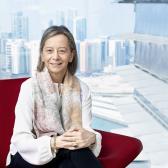
Dominique Senequier CEO and Founder
-
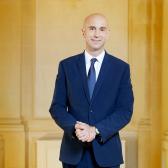
Mark Benedetti Co-CEO
-
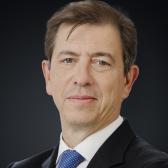
Mathias Burghardt Executive President
-
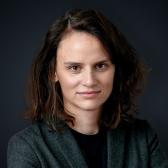
Pauline Thomson Head of Data Science
-
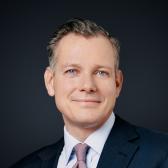
Jan Philipp Schmitz Executive President
-
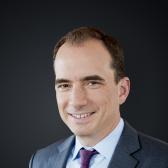
Vladimir Colas Executive President