Sovereignty above all? Discussing Europe’s approach to data centers at Ardian's AI x AI conference
Market watch
Sovereignty above all? Discussing Europe’s approach to data centers at Ardian's AI x AI conference
-
19 January 2026
-
Real Assets
-
Infrastructure, Technology & Innovation
Reading time: 6 minutes
What is digital sovereignty?
What is digital sovereignty?
The morning’s first panel began with a fundamental question: What is digital sovereignty? Michel Paulin, board member at Quandela and former CEO of OVHcloud & SFR defined it as "freedom of choice," rooted in a clear understanding of dependencies. He outlined three critical areas of reliance: technological, legal and commercial. Europe is currently dependent on foreign companies for much of this, Paulin said, advocating for Europe to control the "base layer" of digital infrastructure and cloud computing, warning against ceding this control to foreign entities.
These concerns were echoed by Henri Verdier, CEO of the INRIA Fondation and former Ambassador for Digital Affairs for the French Government, highlighting real-world examples illustrating the costs of technological dependency, such as the Amazon outages and geopolitical threats involving rare earths and the weaponization of digital services against individuals. He pointed out Europe's tendency to "over-philosophize" the concept of sovereignty, instead urging an entrepreneurial posture. For him, this means investors should avoid any situation in which their business could be disconnected by a single decision. For example, companies using the cloud should diversify with at least two solutions from different jurisdictions.
Investors and entrepreneurs should always be aware of how geopolitics could impact them.
Sovereign data centers: an opportunity for Europe
Sovereign data centers: an opportunity for Europe
The discussion turned to the pragmatic challenges of building this sovereign infrastructure, particularly data centers. Gonzague Boutry, Managing Director Digital Infrastructure at Ardian, said Europe has a unique window of opportunity, as much of the essential infrastructure needed for AI is not yet built.
We need to "repatriate" critical infrastructure and Europe's inherent advantages: existing energy resources including France's nuclear power capacity, excellent connectivity, and a wealth of innovative startups.
However, European regulation and red tape can impede progress. Boutry noted that strategic data center projects take an average of two years to receive permits in Europe, compared to three to six months in the US or China.
Paulin lamented Europe's fragmented approach, noting that it seems to have several, often competing strategies. We can't outcompete the US on scale, he stressed, suggesting instead a "European way" centered on open source, public infrastructure, and efficiency in smaller, specialized models. While building European graphics processing units (GPUs) would be an immense challenge, creating data centers is much easier. This also requires fostering European champions. “Mistral AI is great,” said Paulin, “but we need four, five or six of them.” Verdier reminded the audience that Europe is the birthplace of many open standards – Linux, Wi-Fi, Bluetooth, aspects of the web itself. He said Europe has the historical capacity for creating global organizing principles, but it was now up to European governments.
On this, speakers agreed that Europe had to pick its battles. But does Europe have a strategy, asked the moderator Sophie Pedder. “Too many!” answered Verdier. There was a clear consensus that Europe needs to unify around a common roadmap. For many in the auditorium, this would require a pragmatic regulation and not one that slows down Europe’s effort.
The crucial roles of innovation and education
The crucial roles of innovation and education
But what about the enormous energy consumption of data centers – does that not contradict Europe's commitments to reducing its carbon footprint? Paulin brought up innovations such as new wafer-scale GPUs and liquid cooling systems are drastically reducing energy and water use in data centers and challenging the narrative that they are inherently unsustainable. Boutry agreed, noting that future data centers can be built sustainably, especially with Europe's clean energy sources, and underscored the need for educating the public on such advances. As infrastructure investors, he asserted, the focus should be on building adaptable capacity, agnostic to specific technological shifts.
-
20%
female engineer representation in Europe
-
40%
female engineer representation in India and China
-
20,000
young women guided into tech studies through INRIA Fondation's TechPourToutes program
Finally, the panelists debated the crucial role of talent and education. Paulin insisted on the need for greater investment in academic research and global innovation, university science hubs, and fostering pathways from research to AI startups and data-driven companies. He also mentioned the challenge of attracting more women to tech, noting Europe's 20% female engineer representation lags behind India and China's 40%. "It's never too late," he declared, reminding the audience that technological landscapes are constantly shifting. Verdier reinforced this by mentioning INRIA Fondation's TechPourToutes program, aimed at guiding 20,000 young women into tech studies, and emphasized the collective effort required.
The panel concluded on a note of cautious optimism. Europe possesses the investment capacity, the talent and the fundamental knowledge to build a sovereign digital future. However, achieving this vision demands unified strategies, accelerated execution, pragmatic regulation, and a relentless focus on fostering innovation and talent.
In Europe, we have the opportunity to master our own digital infrastructure. Now we need to execute.
-

Michel Paulin Board member Quandela (the Quantum Photonic Leader) and ex-CEO OVHcloud & SFR
Michel Paulin has spent most of his career in the Tech and Telecommunications sectors. He is currently the Chairman of the Comité Stratégique de la Filière (CSF) for Trusted Digital Players, a sector that includes software publishers, cloud providers, artificial intelligence, metaverse, and quantum technology companies.
He also serves as a Board Member of Inria (the French National Institute for Research in Digital Science and Technology) and Numéum, the employers’ association and professional organization for the digital industry.
In addition, he is an independent board member of three companies: one specializing in quantum technologies, one providing data center hosting services, and another developing B2B billing software.
Michel Paulin is a graduate of the École Polytechnique and the École Nationale Supérieure des Télécommunications de Paris, and a member of the Corps des Télécoms. -
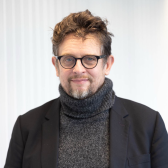
Henri Verdier Ambassador for Digital Affairs, French Government
Henri Verdier has been a digital entrepreneur since 1995. Starting in 2013, he joined the French government, first as Chief Information Officer, then as Ambassador in charge of digital affairs.
In that role, he notably served as the President of the Republic’s envoy for the preparation of the “AI Action Summit” in Paris in 2025 and led the French delegation in UN negotiations. He is now the CEO of the Inria Foundation.
He is the co-author, with Nicolas Colin, of L’Âge de la multitude: Entreprendre et gouverner après la révolution numérique, and, with Jean-Louis Missika, of Le Business de la Haine : Internet, la démocratie et les réseaux sociaux. -

Gonzague Boutry Managing Director Digital Infrastructure, Ardian
Gonzague Boutry is Managing Director and board member of portfolio companies such as Indigo and A88.
He joined Ardian in January 2012 as an Analyst within the Infrastructure team in Paris.
He was a member of Ardian Millenial Comex.